Human Condition · Essays
Manifesto (Turned Treatise) on Love - Full Version
A personal exploration of romantic love, its history, challenges, and the qualities that help it last.
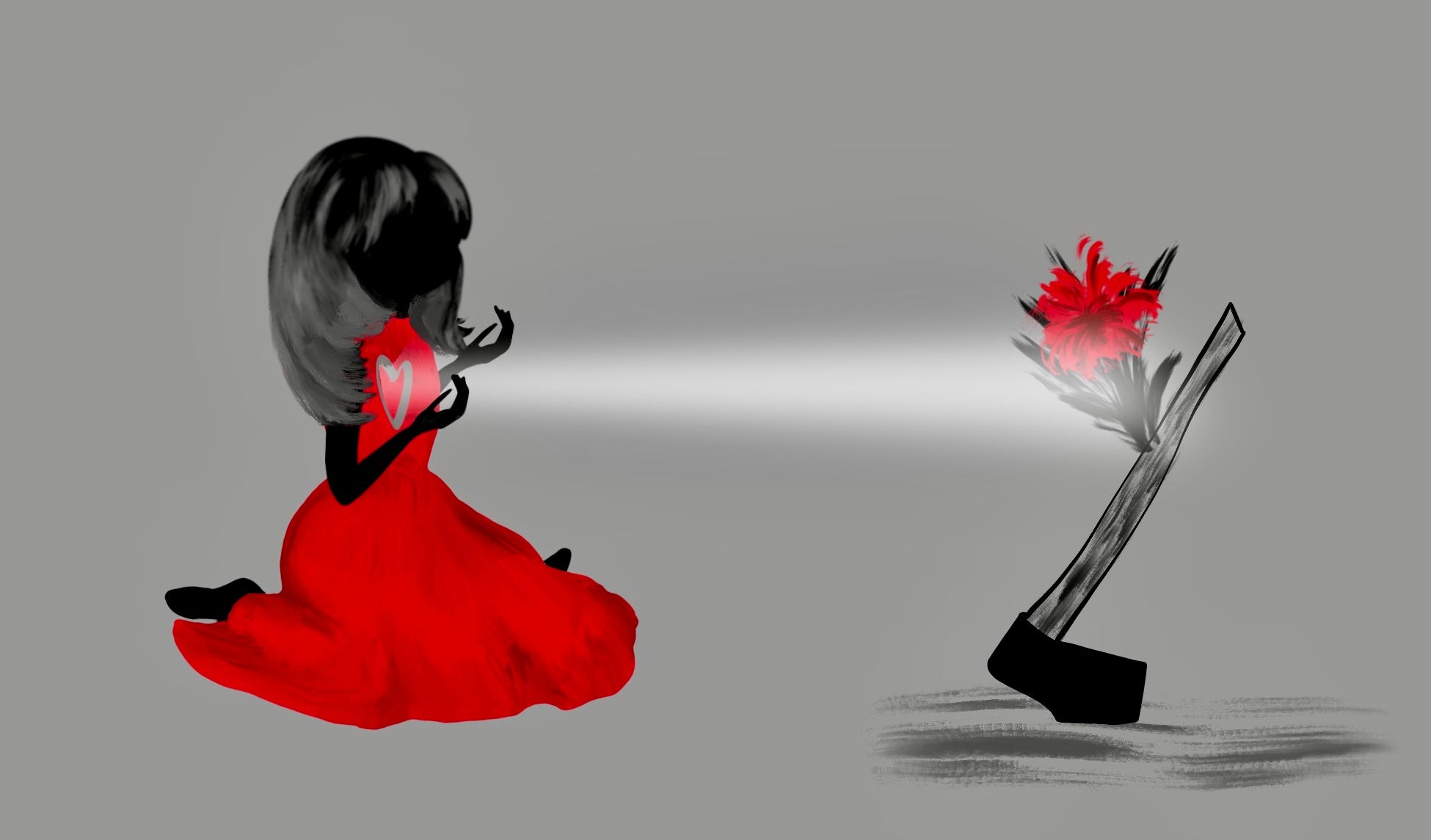
Happy belated St. Valentine’s!
This (very long) post is comprised of the following parts - pick any one that interests you or read the whole thing:
Intro
Part 1 - Brief History of Love (Caregiver Influence - Scarlett O’Hara - Tsundere)
Part 2 - Attempt to Break Free from Love (Loss Aversion - Schrodinger’s Cat - Litany of Gendlin)
Part 3 - Love Challenges (Pattern-Determined Lives - Nietzsche’s Footbridge - Attachment Styles)
Part 4 - Criteria for Lasting Love (Tragedy of Unobserved Life - Ender’s Game - The Name of The Wind)
Epilogue
(I love sharing random mental commentaries in my writing as Side Notes (SN), so bear with me here :) SN: My position on this holiday is that it’s a celebration of love, in all its shapes and forms, so single or not, everyone can celebrate a love on this day.)
What do I have to say about love? Nothing that’s never been said before, that’s for sure. Yet that does’t matter because I’m convinced that when it comes to love (and plenty other concepts), authenticity tramps originality, meaning that the reflection on and identification of what love (or any other concept of this kind) means to me specifically is more important and beneficial than finding something new to say about it. I’m not here to give you an epistemology of love in general. I also don’t think it’s feasible to arrive at one universal definition of love that will work for everyone. But definitions do matter: aligning on those with ourselves helps gain clarity on what we’re seeking (after all, it can be hard to get what you want if you don’t know what you want to get); while aligning on those with others helps avoid or address communication gaps and hurtful misunderstandings. Epistemology (study of how we know what we know) can give an insight into how we arrived at our definitions and whether they are truly ours or have been adopted from the social influences around us and could benefit from tweaking.
So, today, I’m going to dive into a bit of a personal exploration on romantic love, including what it means to me and how I arrived at those meanings. But I would like to invite you to do a bit of journaling on this subject as well because whatever I say is only really true for me. Feel free to use the prompt suggestions below. You can decide what type of love could benefit from this kind of writing deliberation or journal about each type: familial love (storge & philia), romantic love (eros), self-love (philautia), spiritual/divine love, and universal love (agape). (SN: I just realized that I’m growing uncomfortable with the word “prompt” given its association with AI - it probably goes without saying, but please don’t use AI for this.)
What does (this type of) love mean to you? How do you know you love (or are loved)?
What is the epistemology of your definition of (this type of) love? What is the narrative of your relationship with it? (i.e. brief history of love)
What convictions/assumptions is your definition of (this type of) love based on?
Why do you want (this) love? What do you expect/want it to provide for you?
(SN: When it comes to certain concepts, it’s a lot easier for me personally to define them in terms of what they are not in order to narrow down the space around what they are. I now find it amusing because I recently read an article on how to spot AI in writing, and one of the giveaways was the overuse of the structure “x is not a/b/c/, x is d/e/f” - so, while I’m not striving for originality here, now I’m apparently running the risk that my habitual attempt at defining something in terms of what it’s not might be considered AI-written. Although, let’s be honest, my writing is so chaotic and all over the place that nobody would ever suspect that I used AI, for better or for worse. And maybe this will be not so much a meditation on what love isn’t but rather what my convictions around it are, but admittedly, the length of this essay got out of hand.)
Part 1 - Brief History of Love
(Caregiver Influence - Scarlett O’Hara - Tsundere)
It should not be surprising that our relationship with love goes through many phases throughout our life. It often starts with some vague understanding of this concept based on our childhood experiences, specifically, the little parallels we subconsciously observed and absorbed between expressions of love by our caregivers and their actions. These formed our first associations around love: was it only ever conditionally expressed in response to certain behaviors by us; was it withheld from us (in form of attention) until we acted out; was it equated with any other concepts in our mind - safety, duty, uncertainty, etc.?
So, in my case, my initial experience of love was as pure as it can get from the perspective of being a long-awaited child, especially to my dad. He spent so much time with me during my early years that thanks to him, I could read at the age of 3. With all that attention, I was still a pretty self-sufficient child (maybe exactly because I was given attention freely and in abundance that I didn’t feel the need to demand it, who knows what combination of nature vs nurture played role here). Then, when I was 5, my family moved to a small village, as my dad was entering the agricultural business. Suddenly, there was less of both of my parents in my and my younger brother’s lives, since life in a village and agriculture are both extremely demanding. To my young brain, it must have felt like a loss - like there was a before and an after and love could just dwindle down significantly in the shortest time. That change in my experience of love must have influenced me so much that I developed the fear of loss. At first, I coped with it by checking on my parents at night to make sure they were breathing and wouldn’t permanently leave me. This continued on and off for years. Then, a little later, it transformed into a conviction that the surest way to avoid loss was to never let anyone in - after all, you can’t lose something you don’t have. This conviction wasn’t quite conscious, but the patterns of my behavior around people trying to get close to me strongly suggested it.
Now, our relationship with love during those early years isn’t just shaped through interactions with people but also through our interactions with content media, which at the time used to mean books, magazines, comics, movies, series, and cartoons. The stories we’re exposed to (and the context in which we’re exposed to those stories) can have a profound impact on the formation of our definition and understanding of love. Can you recall your favorite love stories or couples from those childhood/teenage years? What did they mean for how you viewed (or maybe still view) love? Everyone has their own takeaways from books and stories, but I do invite you all to analyze and reflect which of your favorite main characters’ romantic principles you too might be subconsciously mimicking your relationships after - it can be a very revealing reflection.
For me, it started off as a longing for a promise of an escape, heavily influenced by fairy tales (from “Beauty and the Beast” to “Swan Princess”), movies and animated series/anime (from “Sailormoon” to “W.I.T.C.H.”), and books (from “Gone with The Wind” to “Anna Karenina”). I was a voracious reader in my childhood and teenage years, probably because the abrupt reduction in my parents attention to me created a vacuum that I strived to fill in through vicarious experiences of love in books, magazines, and movies. Some books and movies came into my hands a bit too early. So, (probably) naturally, the imprint that those movies and books left on my developing psyche was a bit too deep. I watched “Titanic” for the first time when I was 6 (parents weren’t around to censor it), and my main takeaway from it at the time was that you sacrifice yourself for a loved one. I wasn’t even a teenager when I read “Gone with The Wind” by Margaret Mitchell and “Scarlett” by Alexandra Ripley. Which is unfortunate because as some of you might know, Mitchell’s Scarlett was an antiheroine (however fascinating), who spent the entirety of the story longing for someone she couldn’t have yet as soon as she had him she no longer wanted him, and because Scarlett was intended as an antiheroine, Mitchell made sure that she got no happy ending. At the same time, Ripley’s Scarlett gets a sort of a redemption arc and, after all the challenges, ends up with the love of her life, whom she had shunned for years before. We shouldn’t need to lose someone to realize and admit to ourselves that we loved them, but that’s exactly what Mitchell’s Scarlett does, and yet instead of ending there with a valuable lesson of “Try to not miss the happiness that’s right in front of you by keeping your eyes on a silly prospect of that-I-don’t-even-know-what,” Ripley decided that Scarlett’s lesson should be “Do your best to be your worst and lose someone wonderful out of your life because, you know what, it doesn’t matter - they will come back to you after you learn your lessons!” Neither of those stories is a healthy scenario for a child to absorb. But alas, I did, and on top of my already forming fearful-avoidant attachment patterning nonetheless.
Then high school further exacerbated my growing conviction that to avoid loss, it’s better to never have gained: in a vicious loop of a repeated pattern, a close friend would confess his love, expect return of his affections, resent me for my inability to do so, stop being friends with me for a while, then reconnect with me and repeat the pattern. In a twisted way, it had taught me to be afraid of being loved because that meant 1) the confessing person could claim the right to have expectations of me on the grounds of his feelings for me (i.e. somehow I owed love for being loved) and 2) the confessing person could punish me for the lack of mutuality by severing our connection. To this date, I don’t do well with expectations, so it should come as no wonder that my solidified solution became to just not let anyone too close.
It’s terrifying how quickly a child’s brain absorbs the most ridiculous takeaways as principles to live by without ever properly questioning them, as there I was, quickly becoming a tsundere (in anime terms, that’s someone harsh/cold on the outside but affectionate/warm on the inside and who often pushes people away in pursuit of self-sufficiency while longing for connection). Below is a summary of some of the “love lessons” I got thus inculcated with as a kid and had to unlearn as an adult (the unlearning of some of these is still work-in-progress).
Love creates room for (and gives out rights to) expectations (and even leverage for extortion).
There’s one true love, and if you miss it, that’s it.
Love is accompanied by pain and suffering.
Love requires sacrifice.
Love ends in betrayal.
Love ends.
Coaching questions for self-reflection:
Which early experiences taught me what love felt like and which taught me about potential costs of love?
What did I learn, very young, about closeness, attention, and safety that I might still be reenacting now?
Which fictional love stories did I treat as emotional instruction manuals, and what exactly did they condition me to expect?
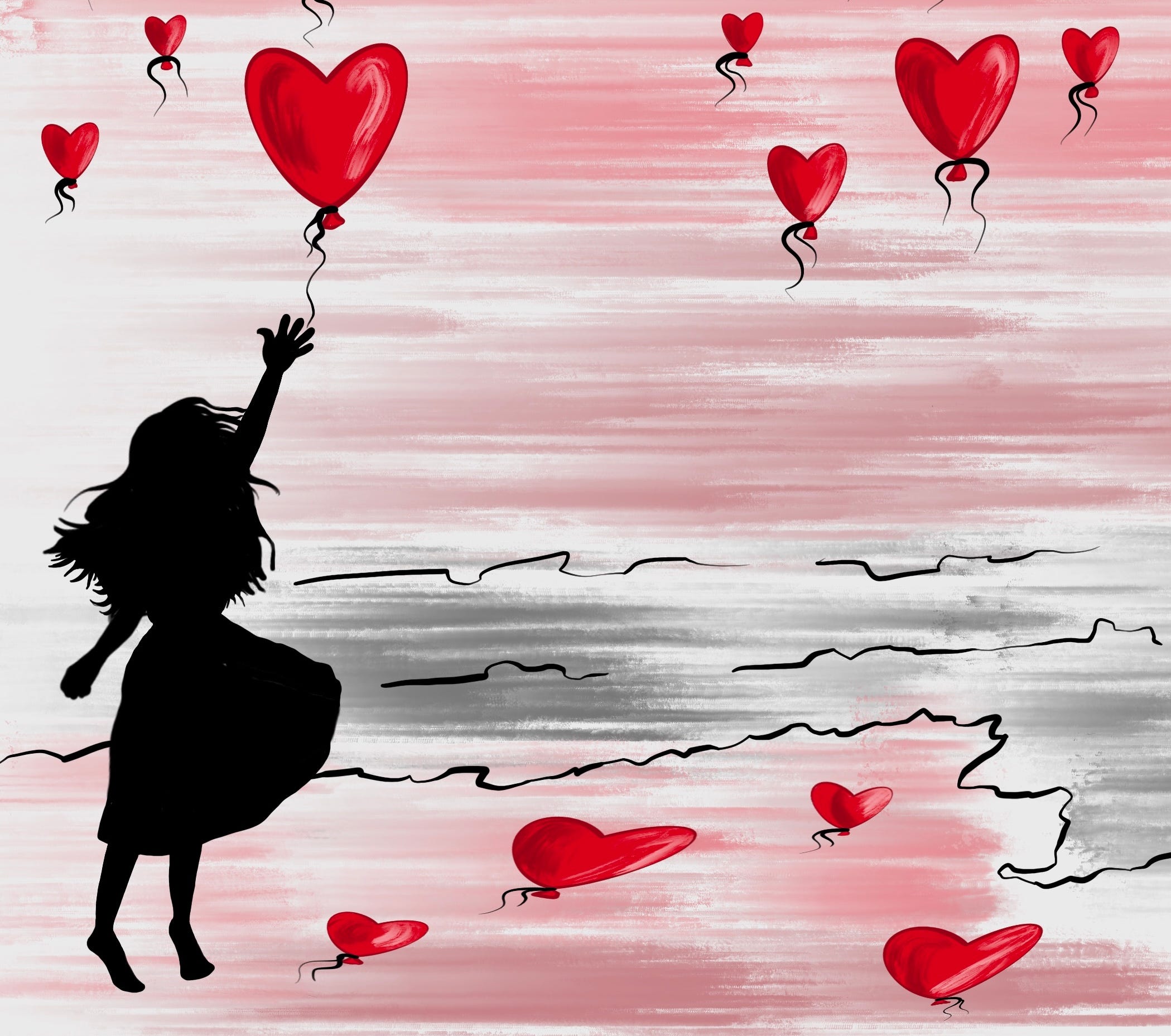
Part 2 - Attempt to Break Free from Love
(Loss Aversion - Schrodinger’s Cat - Litany of Gendlin)
I dare assume that most of us, at some point in our lives, go through a period of unadulterated cynicism, when love feels like a ridicule - a made up concept created to taunt us and goad us into hopeless search and distract us from more important endeavors, whatever they might be. In my case, after graduating college and going through a number of unpleasant (to put it mildly) experiences, I didn’t just take a vacation from love and hopes for it - I outright swore it off.
I felt actual liberation and relief from swearing off love, marriage, family, and children. Not in the way that I no longer wanted any of it, but in the way that I accepted that I’d likely never have it. Which was painful to face, but not as painful as torturing myself with regularly deceived hopes: going through each day with hopeful expectations for meeting someone and starting a family with them and having to deal with the disappointment and regret of not getting that, day after day, keeping track of the growing distance between my current reality of solitude and a future opportunity of having a family, let alone kids. Living in that liminal space of hope and possibility felt more cruel than coming to terms with being single for the rest of my life. So, in a way, the certainty of loneliness and unhappiness associated with it was bringing more relief and peace than clinging on to a meager possibility of family and happiness. That was when I first conceived of the idea that the opposite of hope isn’t despair but peace.
For some of us, the certainty of not having the life we want hurts a lot less than tiptoeing around the possibility of having that life. After all, hoping for even the tiniest possibility of love can consume too much in the form of fantasies and hopes, in the form of could-be’s (which would then rot into could-have-been’s). And where there is a tiny possibility of a gain, there is a much greater possibility of a loss - a vicious cycle of daily tapping into the possibility of that gain and regularly snapping back to the reality of not having gained anything, which equated emotionally to the reality with a loss. Again, not a real loss - just the loss of not having gained that something that particular day. But the brain is famously loss-averse, so it tends to react a lot stronger to the loss, even an imaginary one, building it into a series of losses, a series of could-have-been’s, a series of not having gained something it has hoped to gain. It focuses on not having love now more than on the possibility of one day experiencing it. And that’s what hurt so much. So swearing off love became my form of self-soothing, as it allowed me to “relish” in this absurd sense of certainty of having already met (and lost or not even recognized) my soulmate and, as such, not having to wreck myself with the uncertainty around ever finding that person - I already had, even if we didn’t live happily ever after. Every cell of my body hated uncertainty and preferred the miserable known to the potentially happy unknown.
So yes, there can be peace in giving up on love. But. Human psychology works in amusing ways. Often, when we let go of an obsessive pursuit of something, it comes into our life knocking. Part of that “miracle” has to do with the escape from the tunnel vision that a fixated pursuit can create - wanting very specific something in a very specific way can blind us to all the other/better alternatives in our environment. It also has to do with shedding the stress of the pursuit, especially if it’s been going on for a while - the neurophysiology of stress is such that it makes us more susceptible to sustaining the reality that perpetuates that stress, aggravating the tunnel vision, and so on. After all, we are less likely to find a partner when we’re actively looking for one because that kind of active pressure could easily render us blind and unable to be present/authentic (or maybe that’s just me). There’s quite a bit to be said on this topic, but I’m trying really hard to not go on a tangent here, given that it’s not the main subject of this particular piece of writing.
Anyways, my awareness of those aspects of human psychology turned out to be a double edge sword. As I was swearing off love, I immediately became aware of how the very act of swearing it off could help bring it into my life, which in turn undermined my ability to swear it off in the way that would be completely void of hope. This is cognitive recursion at its best (or worst?). Let me try to delineate. I remember feeling a bit like Schrodinger’s cat where I existed simultaneously in two, or actually, in my case it was kind of three, states that represented the future possibilities diverging from the current moment, with the current moment being their convergence point:
One in which I swear off love and mean it in my thoughts and actions, yet by doing so, I set myself on the ironic path of actually discovering it;
Another in which I swear off love, but I’m aware that by doing so I might be setting myself on the ironic path of actually discovering it, so this awareness results in hopefulness which makes my swearing meaningless and thus diverts me from that ironic path;
And yet another one in which I swear off love, and I’m aware that by doing so I might be setting myself on the ironic path of actually discovering it, which feeds into hopefulness that negates my swearing and thus diverts me from that ironic path, but I am aware of this entire scenario and I know and fear that my hopeful awareness of the possibility of the ironic path makes my swearing futile, and so I only half mean my swearing it off, which leads to the most uncertain outcome of the three.
And yes, maybe it’s not entirely accurate to compare this to the superpositions of Schrodinger’s cat, but you see what I mean, don’t you? Ah, the beautiful torture of metacognition.
Here’s another thing. People addicted to porn have trouble with sex. People addicted to fantasies have issues with reality. I’ve fantasized about and lived through so much wonderful stuff in my head that I grew intolerant of the reality. My biggest problem with love was that I was in love with the made-up idea of it more than the actual experience of it. I had built it up in my imagination, through fantasies and deliberation, so much that it was just no longer fair to anyone coming into my life with the intention of sharing that sentiment with me. It was not that I couldn’t accept anything less than what I imagined love should be, it was that I felt like that was all I was constantly doing, and it wasn’t bringing me any content or satisfaction. I had too many expectations and hopes for how I wanted to feel in love; all on top of too many fears and distrust around it - I didn’t think I could get past all of that at that point in my life.
Speaking of feeling - you ever pondered on how we tend to confuse feelings for knowledge? Or rather, how while feelings, as data points, can provide knowledge, knowledge doesn’t tend to be something that’s just felt. Yet, during this cynical phase, which lasted for quite a while, I felt that I’d never love again (as it relates to romantic love, specifically). I felt that I would never be in a relationship or married. But instead of treating those as feelings, as data points, I viewed them as factual knowledge - somehow I knew I’d never have the love I wanted, I knew it was too unrealistic, and I knew I didn’t want to accept anything less. I convinced myself of the certainty of my own doom, which, of course, can be quite self-fulfilling. So, in an act of stubborn renunciation of unfulfilled longing, I swore it all off. I just wanted to be done with all of those unpleasant companions of clinging on to a possibility of love - the painful hope, the fears, the guilt.
There’s still plenty of fear around the prospect of remaining single forever. Even though or maybe exactly because I did have someone who used to be important to me (SWUTBITM), whom I used to consider the soulmate I failed to “live happily ever after with”, and who influenced a lot of my convictions about love. And the thing is, when it comes to this SWUTBITM, whether he was a real possibility of love and happiness for me or not matters little in relation to the pain either outcome causes - if he was, it’s a pain of loss and regret; and if he wasn’t, it’s a pain of fear and despair (because then in all my life, I still haven’t known love and what it stood for). He did introduce me to the Litany of Gendlin, which provided some solace against those unpleasant companions by reminding me that that there was no point in fearing my lonely future, for I was already living it (cue “sad laughter”):
“What is true is already so.
Owning up to it doesn’t make it worse.
Not being open about it doesn’t make it go away.
And because it’s true, it is what is there to be interacted with.
Anything untrue isn’t there to be lived.
People can stand what is true,
for they are already enduring it.”
Coaching questions for self-reflection:
What does renunciation of love protect me from having to feel, risk, or admit?
In what ways has fantasy helped me cope with challenges, and in what ways has it made reality feel insufficient?
What would it look like to turn my hopes about love into realistic optimism?
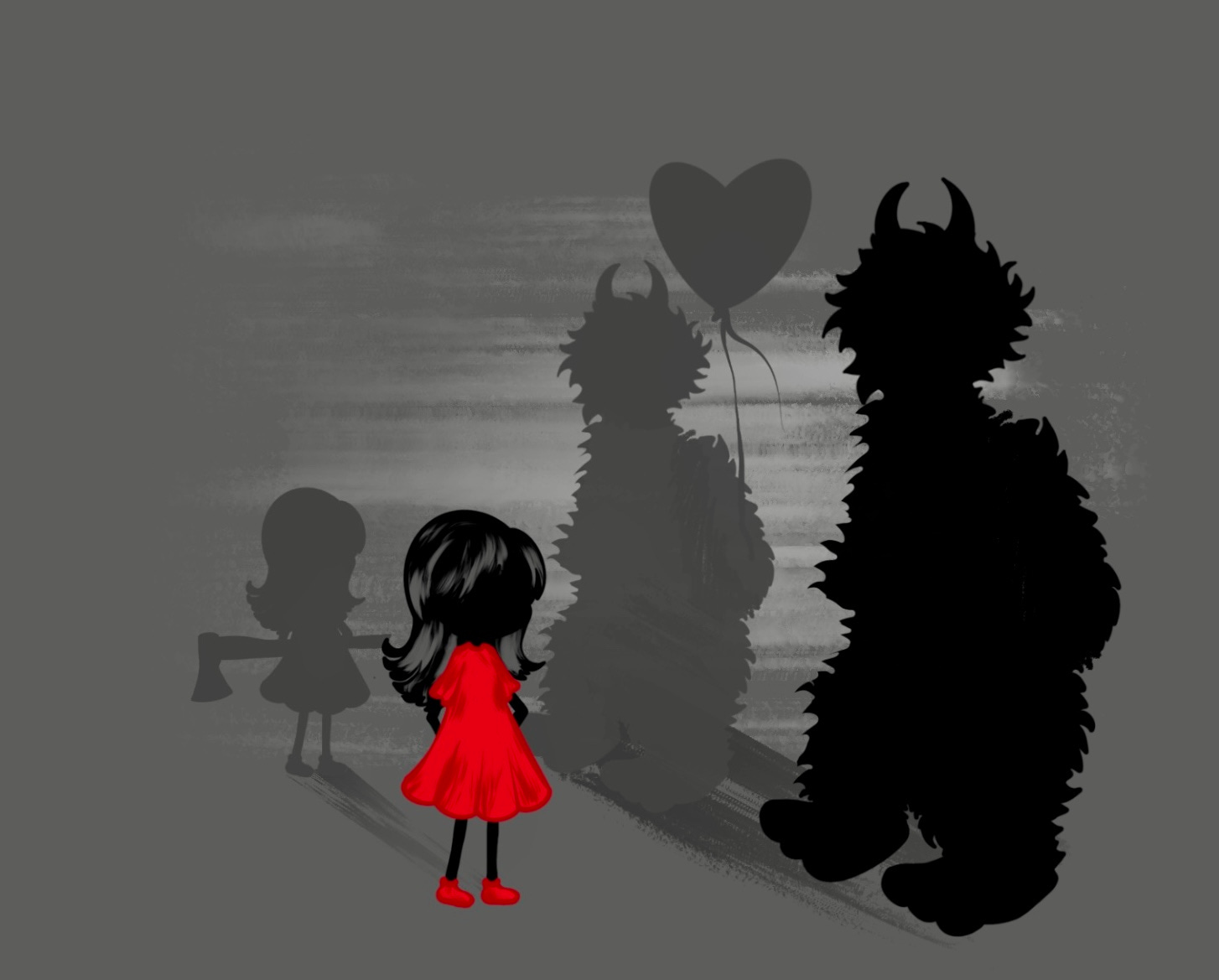
Part 3 - Love Challenges
(Pattern-Determined Lives - Nietzsche’s Footbridge - Attachment Styles)
There are three common scenarios of pattern-determined lives. Scenario one: living out the pattern prescribed by the impactful circumstances of our early lives in complete ignorance of that pattern or our ability to change it. Scenario two is about becoming aware of the self-perpetuating pattern but giving up too early on changing it, convincing ourselves that the pattern is just our fate and all our attempts to alter it are futile. In scenario three one is then taking such drastic measures to rewrite the pattern as to end up living it out in reverse, due to the attention being not on building the desirable life but on avoiding the undesirable one (but a pattern lived out in reverse is still a pattern). So, lessons from considering each of these scenarios then are: 1) become aware of your patterns (specifically those that make it challenging to live the life you want), 2) believe that you can change what you want to change, and 3) while changing, be clear on what you’re working towards (as opposed to what you’re trying to avoid).
I’ve already contemplated on how some of my unhelpful patterns formed, but now I want to discuss them in more detail - these harmful convictions and unrealistic expectations for love that I find/found standing in my way. Funny enough, for some of these I think the problem is less in how unhelpful the convictions are or how unrealistic the expectations are and more in the distance they create between what I infuse into the definition and meaning of love versus what others do. Still, identifying what no longer serves me and reworking those is an important investment into updating my model of the world and opening up new possible realities within it, in defiance of the pattern-determined life.
-I-
“I want to love before I’m loved but that I’m very bad at.”
This is, of course, my avoidant attachment style speaking. Though all this means is that I simply desire to have an opportunity to develop feelings towards the person, before facing the pressuring expectation of reciprocity from him. Sometimes I’m accused of wanting to always be in control. But it’s not about control (after all, control is an illusion). It’s about the desire for autonomy, to the extent it’s even available to us. It’s about wanting to make and act on a choice rather than comply with a request and thus submit to the requester, even if both should supposedly lead to the same outcome - that of getting closer.
Maybe that’s why Nietzsche’s footbridge resonates with me on so many levels - the reluctance to take an action towards proximity that I planned to take only because someone decided to invite me to take it; but also the reluctance to reciprocate someone’s motion towards proximity with me because that too feels like surrender of power, with power apparently getting in the way of closeness, though admittedly in this particular case what I mean by power is still autonomy/choice.
Nietzsche’s Footbridge Parable:
There was a time in our lives when we were so close that nothing seemed to obstruct our friendship and brotherhood, and only a small footbridge separated us. Just as you were about to step on it, I asked you: “Do you want to cross the footbridge to me?”
Immediately you did not want to any more; and when I asked you again you remained silent. Since then mountains and torrential rivers and whatever separates and alienates have been cast between us, and even if we wanted to get together, we couldn’t. But when you now think of that little footbridge, words fail you and you sob and marvel.
-II-
“You have to learn to love yourself before you can truly love another.”
“How can you expect someone to love you, unless you love yourself?”
Well, the short answer is you can. Self-rejection/hatred and its capricious companion depression impact libido and one’s ability to feel physical/sexual desire. They do not negate one’s capacity for love. Yes, this love might be peppered with attachment wounds, but human contact can be so healing when paired with self-work. The idea of working on ourselves and our baggage in isolation and feeling like we need to be completely “healed” before we can enter a relationship is damaging. Sure, relationships should’t be treated as a cure for our personal trauma and emotional wounds, as that puts unfair expectations and burden on those relationships. But it’s okay to be a work in progress and allow the relationship with a partner to shine light on what still needs healing. And maybe people in process of healing will tend to attract other yet-unhealed people and hurt each other in the process, with the most common example being the fatalistic attraction between the anxious and avoidant attachment, but that’s kind of how healing works - we can’t always tell what requires treatment, until someone puts their finger on the sore spot. In other words, intrapersonal healing often supports and is also supported by interpersonal connections - when we connect with others, we learn to better connect with ourselves, and vice versa. Some say, “Love should be easy - if it’s not, you do it wrong.” But relationships are work and instead of easy it’s more about being fulfilling and feeling right.
(SN: If you would like to learn more about attachment styles, do check out Heidi Priebe on Youtube.)
-III-
“I want to be loved as a mind, before I am loved as a body.”
After a lifetime of objectification, including self-objectification, I say basta. Mind over matter, please. As in, love the brain before the body (and yes, I know that’s not what “mind over matter” means, but also, if you tilt your head just a little to the side, it kind of does). Because honestly, I don’t give a damn about how much a man likes my face and body, if he doesn’t show a greater fondness for my mind. The worst compliment for me is “You’re hot” - literally makes me want to gag (have I crossed the TMI threshold yet in this post?). This is why I’m so focused on the cognitive attraction before anything physical, as well as prioritizing the non-physical types of intimacy. Physical attraction tends to betray short-term interest, especially in the age of one-night stands. At the same time, physical attraction can actually grow from the mere act of getting to know someone - the more we like a person for who they are, the more attractive we tend to perceive that person.
Someone recently remarked that I have “curly” thoughts. That might have been one of the more accurate descriptions of the inside of my mind - everything is so tangled up together that it’s too easy to draw connections between the most random things, such as love and quantum physics or emotional literacy and painting (a topic of a future essay). I just need to find someone, whose mind would be fond of (rather than get annoyed by) these qualities of my thinking. After all, you can’t fake this fondness for the mind because it will quickly turn into a burden - just imagine having to spend time with someone whose way of self-expression annoys the hell out of you.
We all have our own unique perceptions and definitions of what’s beautiful, funny, interesting, etc. And just how it’s not about being beautiful to everyone but rather finding someone whose idea of beauty is you; similarly, it’s not about having (or tweaking) a personality that appeals to everyone, but rather finding someone whose idea of “their person” is you (and who in return is also your idea of “your person”). But, I guess in the end, we’re just looking for someone who would like the things about us that 1) either we feel self-conscious about and hence need that external validation over or 2) we too find important to us. In my case, those are my cognitive and creative sides, especially my writing and music. It takes a single person’s appreciation to make a piece of art/creation worthy/worthwhile. And I would like to find the joy in the knowledge of my partner being my primary (first and sometimes only) audience.
I always looked at this as my non-negotiable, but apparently, according to my therapists and friends, this conviction is important for me to rewrite because it defies the basic truths of evolutionary psychology and physiological wiring - physical attraction will (almost) always precede any other interest. So maybe, a still optimistic part of me writes this reflection in defiant hopes that someone out there will read the whole thing, and go, “Huh, that was curious,” and realize that whatever I am, as seen through the expressions of my mind in these writing pieces, is exactly what they like, thus creating an appreciation for the mind and the person before ever considering their physical traits. And then sending me a DM:)
(SN: Of the physical/bodily attraction considerations, scent probably matters the most, at least to me (but also to others). On a biological level, we’re wired to be attracted to the pheromones that signal a potentially healthy genetic match (all this usually means is that we’re not related to each other, but it can also imply perception of health). It can be perceived as controversial for many reasons, but I’m not one to argue with my own physiology on this because the truth is that sometimes a mere scent of the person (and I’m not talking about their perfume/deodorant here) can repel or attract my attention to the person. My physiology does add another level of complexity here in the form of an overly sensitive olfaction - so much so, that I get physically repelled by smells of cigarettes, especially weed, alcohol, and strong perfume (if we’re in the same car, I can get physically ill from those - it can get that bad). So while I am okay with my partner smoking or drinking, I can’t be physically present during those activities or immediately after them. (cue “head-shake and shoulder-shrug”))
-IV-
“Love is forever.”
“Love is immortal, if it dies - it wasn’t love.”
I left my biggest love challenge for last - the main unrealistic expectation, the most conflicted and confusing one, the one I haven’t resolved yet - that love should mean forever. This might be a little surprising, since in part 1 above I noted how one of my early childhood convictions and fears about love was that it ended. But somewhere along the way, my brewing attempts to soothe the ache arising from that conviction soured it into a possibly worse expectation. Because to deal with the fact that I’ve seen love end and that the promise and experience of temporary love haven’t been soothing, I formed an idea that anything that ended just wasn’t love to begin with - a child’s mind can perform some astonishing somersaults to resolve internal conflicts.
In the world of change and uncertainty, I burdened love with the expectation that it should represent an island of stability and predictability. It might in part have to do with how my family keeps that island afloat for me. Because when I say that I love my family, my parents and siblings, I know (or maybe I just feel - would I even know the difference?) that I will always love them, and it won’t go away (there might be other emotions/feelings in the mix, but the love doesn’t disappear). And it seems that of all different types of love - familial, romantic, self-love, spiritual/divine, and universal - it’s specifically the romantic love that tends to not hold well against close scrutiny or time or really much else (cynical much?). Unlike all those other types of love, romantic love dies the most. What a strange sentence to say/read, isn’t it?
I thought I had been loved before. Romantically. Yet I’m no longer sure that experience was love. If anything, I now find some twisted solace in holding on to the conviction that it wasn’t love - that that person (SWUTBITM) never truly loved me; that maybe he thought that he did, he believed it, but he didn’t really know love and thus was sort of lying to himself and to me, or, if not lying, then at least misusing the words and definitions (yes, I’m a stickler for definitions). How does one find solace in the belief that they haven’t been loved? Wouldn’t that hint at the reality in which I’m simply unloveable, at least in the way I wish to be loved? And yet somehow, the reality of me being unlovable seems to be preferable to the alternative where love is not only harmful/painful but also perishable. Somehow, I’d rather believe that I can’t be loved at all than accept partial affections and undermine my foundational core conviction - that if you truly love someone once, you can’t ever stop loving them.
But here’s a thing - I thought I had loved before. Romantically. Yet I’m no longer sure that experience was love. Because when I ask myself how I knew it was that, my mind jumps to three main points: 1) there was joy, intellectual thirst, and numerous levels of intimacy associated with that person (SWUTBITM); 2) I wanted him to be happy; and 3) losing him out of my life hurt like nothing had hurt me before. Yet all of that is now in the past tense. This person, the person that used to occupy the deepest corners of my heart, has been slowly evaporating from my mind, which is liberating to an extent, but it also makes me wonder, by the logic of my own definitions (or limitations thereof), whether that was ever love. Because if it was, then what’s the point of any of this?
Now, the attitudes towards love’s expiration vary quite a bit.
Some people might say that they never really stop loving someone that they’ve loved once, with an occasional implication that they just have so much more capacity for love than others. This sometimes can feel like a hint at some sort of superiority, which I know they likely don’t actually mean, at least not intentionally or consciously, but boy, can it still rub me the wrong way - is anyone actually capable of immortal romantic love, and if so, is that exclusive experience reserved for the select few?
Other people, those who have experienced a loss of a loved one to death, might dismiss the whole love-is-mortal problem as a non-problem - just an obvious fact of the reality of life. Although who knows, maybe that’s part of it - when the object of love disappears from the world, love tends to still remain, just in the form of grief. Because when the person leaves (our world or the world) before love has run its course, the feelings tend to get frozen in time, in the shape of an unfulfilled promise of a happily-ever-after. And as we already discussed, the solace coming from the knowledge that we’ve already met our soulmate and lost them can keep us attached to maintaining that frozen love intact.
Yet other people view the whole idea of love needing to expire as serving in support of this healthy choice to part ways with someone that isn’t yet ready for you. The view, which I, in all honesty, despite the rationality inherent in it, hate. It shouldn’t be that easy and simple to just up and choose to leave a relationship because something has stopped working. I think I’ve always known that love can be killed, but it was equivalent to killing an otherwise immortal creature - everything can be destroyed, but on its own, it would’ve lived forever. It should’ve lived forever. But it doesn’t. Everything changes and nothing lasts. And until I learn to accept that, I might not be able to open my heart again. Still, I don’t want to experience the death of love - when the endearment mutates into annoyance, curiosity and interest shape-shift into boredom and indifference, and fascination and inspiration melt into stilted stagnation. If grief is love persevering, then what does one call love that’s given up? Tragedy? Watching my own parents grow apart hurt, and the knowledge of that being a norm rather than an exception hurt even more.
And maybe it’s more about the definitions of death and mortality than anything else. Maybe “true” love actually doesn’t die - it transforms and evolves, but it always maintains the foundation of caring for the other person and wishing the best for them; so that even when the two are no longer together, they will still be looking out for one another. I’d like to believe that that’s how I’m wired towards others, and I’d like to be with someone who’d be similarly wired towards myself. In my family, even when we fall out of touch with someone that once was close, no matter the reason, we still consider it important to reach out to that person if we learn they’re going through particularly hard times (or major life changes), as an act of support and credit to the significance of our past relationship. It’s not about staying in touch - it’s just about continuing to care about the other person enough to send them a message of support when a life changing event hits. One small outreach in honor of the past love, because if you no longer care enough even for that, then that must mean there was never love at all (you know, because I’m beating the dead horse here with this whole “love doesn’t just disappear”).
Going back to how media can have a profound influence on our convictions and mindset, another book that shaped and sustained the perspective that “love should be forever” is What Dreams May Come by Richard Matheson. For those unfamiliar with it, it’s a story of a man who dies and is supposed to go to Heaven, but he’s determined to wait (in the limbo-waiting-area) for the love of his life, so they can go together; yet she, unable to cope with the fact of his death, takes her own life, and as a result is reborn on Earth (as her punishment); so he, unwilling to go to Heaven without her, chooses to be reborn on Earth again as well, counting on the chance of their encounter supported by his strong belief in the attraction of their souls. And that’s about it. It’s not the best piece of literature or the most beautiful story I’ve read, but strangely it still shaped my expectations and hopes around love. Yet somehow, many therapists view that kind of a relationship, where the partners are unable to let go of each other, as unreasonably co-dependent. Unhealthy. From which then a stretch of a conclusion follows: love that doesn’t die is sick.
So, could it be that healthy love disappears? I heard that people with attachment wounds stay in love for far longer than would be considered healthy. Moving on is no easy action. And sure, they say that “grief is just love persevering” but does that apply to unhealthy love too? What if it is a quality of a healthy love to disappear after some time and free you up to love someone else? Because we can love more than one person in our lifetime. Even if our subsequent loves will be spotted by the remnants of the previous ones, pulling at heart strings every time we experience something that we experienced with that other person (though I think most people are lucky to not be plagued by strong associations and related remembrances of relationships past). Healthy love disappears. Healthy love takes new forms in new people. Healthy love doesn’t make you feel cursed with loneliness for the rest of your life and long for death as the only available relief.
Then could it also be that the end of love doesn’t have to hurt? That if free from regret and resentment, if expectations aren’t imposed, then it could feel like just a normal part of the ever changing world. The nature of entropy inherent in everything. Happy long-term relationships where love perseveres are an exception, not the rule, and yet we all stubbornly play in this lottery with what looks like barely a 10% success rate. The pain of loss, of regret, can change us in some massive ways, and although more often than not, that change effectuates itself a little too late, it is still valuable. I’ve taken a particular liking to the relationship philosophy that highlights how every person in our life will eventually leave us - whether due to death or us growing apart - so it becomes about focusing on appreciating the time we have shared with them rather than the regrets about it ending or how it ended. It is all meant to end, so why waste the precious time and energy on dwelling on that?
(SN: If you’re catching yourself in a state of confusion and frustration about not getting any clear conclusion here, then we’re very much in the same boat. But if you might shed any light of clarity on this ever so circular chain of arguments, please do, for both of our sakes.)
Coaching questions for self-reflection:
Which of my non-negotiables are genuine values, and which are protective mechanisms that have turned into obstacles?
What kind of love feels nourishing to me and what kind merely feels familiar because it reflects a childhood experience?
What would it mean about me, if my partner were to always love me, and why can’t I see that as true about me without him/her?
What am I getting to feel when I’m having a fantasy about him/her that maybe I don’t feel in real life?
What do I think it means that/if my partner stopped loving me? If s/he has never truly loved me, what do I think that means about me as a person?
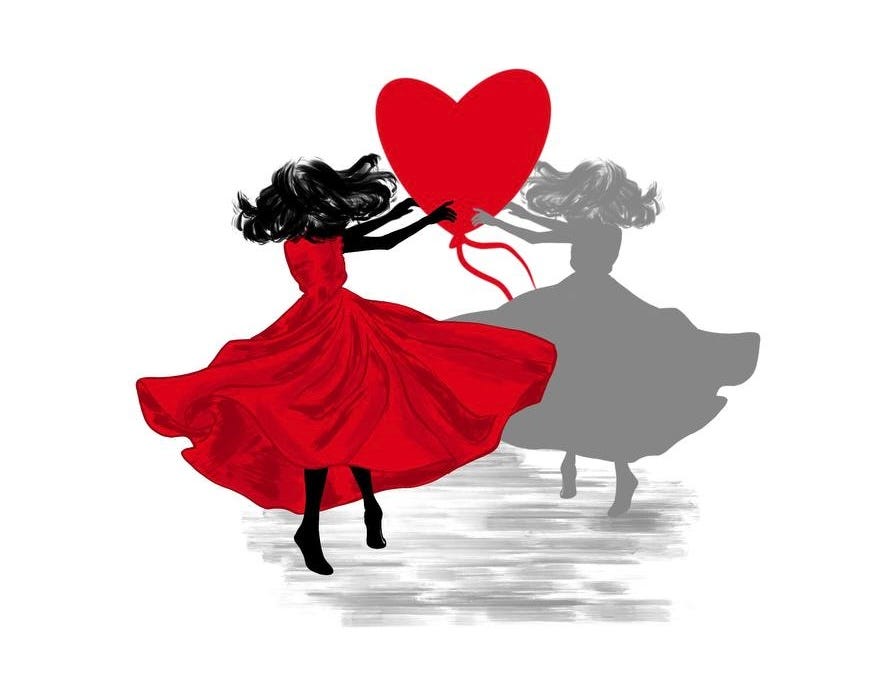
Part 4 - Criteria for Lasting Love
(Tragedy of Unobserved Life - Ender’s Game - The Name of The Wind)
Through my observations, experiences, and general study, I’ve come to realize that love can be a lot of things, as comprised of both nourishing and destructive forces. So, just as I said in the beginning of this very long essay, it’s less about coming up with a universal definition of love and more about determining what I consider love to be for myself and how I want it to show up in my life, which is primarily in a wholesome and lasting way. As a result, I’ve developed a hypothesis: wholesome and lasting love stands on three pillars - 1) love for the person, 2) love for the way the person makes us feel, and 3) love for the shared experiences/memories/dreams with that person. Okay, “hypothesis” is probably a stretch, since once put into words, it seems too simplistic while not quite verifiable (but also strangely challenging to formulate). Still, let me explore these three proposed criteria for a love that lasts.
Love for the person is a criterion that should be the most obvious one, but too often I see us focus on how the person makes us feel at the detriment to our ability to actually see the person as a standalone entity and consider whether we cherish and respect who this person is, what they stand for, what they represent. Here’s a controversial statement that I probably should have explored in depth in Part 3 (Love Challenges): all love is selfish. I hold this because one way or another, we’re always concerned with the way the circumstances of the other person make us feel - in other words, even when we simply want the other person to be happy, it’s because we feel happy seeing them happy. So, when most of our loving comes from “love for the way the person makes us feel,” it tends to result in the most selfish kind of love. Now, let me add that I don’t see anything wrong with selfishness - it’s a very human trait after all - if anything, I perceive wrongness in denying or defying selfishness altogether. Still, “love for the person” allows for a bit more balance amidst selfishness because this criterion is first and foremost concerned with the other person, their unique self, their hopes and dreams, their happiness, regardless of any direct impact to us but also out of consideration for such an impact, since we tend to assimilate with people we spend our time with. One of my favorite quotes by Orson Scott Card is from Ender’s Game: “In the moment when I truly understand my enemy, understand him well enough to defeat him, then in that very moment I also love him.” I think that’s true for a lot of relationships - the intimate familiarity with one’s genuine dreams, fears, desires, and motivations creates the kind of understanding of their heart and soul that if resonated within our own will lead to deep love for the person. I believe this kind of understanding is quintessential to the emergence of what I consider lasting love.
Love for the way the person makes us feel. This one is actually obvious because it’s the leading force behind our engagement with the sentiment of love. More often than not, this will be about either feeling physical attraction towards another person or feeling admiration from them. It might seem like it boils down to biology and vanity but it’s actually quite a bit more than that. There are two feelings that another person can gift to us and that I suspect contribute the most to a lasting love.
One is the feeling of liberation to be our most authentic unfiltered and unencumbered self in the company of the other person. The precious feeling of such psychological and emotional safety that people who co-create it with us and for us become the definition of home. For me, this would be to have the freedom, safety, and trust to be my bubbly child-like self, usually carefully concealed, without being treated like a child.
Two is the feeling of being seen. Truly seen, as we are. To be sought to be known and understood. To have our life, our experiences, witnessed. Observed. The way I see it, one of the biggest tragedies for a human being is to have lived an unobserved life, a life that had no witness to all its unique beauty. And just like how observation of an electron alters its state, so does the state and feeling of being truly seen can alter our own experiences of ourselves and our lives. After all, we can’t know ourselves in a vacuum - we learn about and discover ourselves through our interactions with others, through what those interactions expose and highlight about us, about our preferences and perspectives. It is when we get to spend our life by the side of someone who creates space for us to be as we are, someone who inspires and challenges us to be all we can be, who sees us so truly that through their eyes we’re reflected, revealed, and accepted in our most genuine authentic self, with all our beautiful and not-so-beautiful facets, that’s when we get to experience the gift, the epitome, of truly knowing ourselves. And hopefully, we give the same back to our partner.
In regards to this (although admittedly, in a slightly different manner), a passage from The Name of The Wind by Patrick Rothfuss comes to mind:
“No, listen. I’ve got it now. You meet a girl: shy, unassuming. If you tell her she’s beautiful, she’ll think you’re sweet, but she won’t believe you. She knows that beauty lies in your beholding.” Bast gave a grudging shrug. “And sometimes that’s enough.” His eyes brightened. “But there’s a better way. You show her she is beautiful. You make mirrors of your eyes, prayers of your hands against her body. It is hard, very hard, but when she truly believes you...” Bast gestured excitedly. “Suddenly the story she tells herself in her own head changes. She transforms. She isn’t seen as beautiful. She is beautiful, seen.”
Love for the shared experiences/memories/dreams with the person. This criterion is strongly interconnected with the previous one but it is ever so different. It is not just about being a witness to another’s life but also about being an active par-taker in it. In a way, it’s about experiencing love through all five facets of intimacy we can have with another person: intellectual, spiritual, emotional, experiential, and physical. After all, I firmly believe that linking my life with the right partner is one of the most meaningful contributions to the richness of my lived experience (and I certainly hope it would be true for my partner in return).
Coaching questions for self-reflection:
Of the three pillars described, which do I tend to privilege most, and why?
What does being truly seen mean to me?
How do I want/expect love to change my life?
Epilogue
Here’s something I know about myself and something I have to live with the knowledge of: I know, in my heart of hearts, that no matter the manner in which I live my life, when I’m finally on my deathbed, there’s no scenario I could have followed that wouldn’t result in my regret about and perception/conviction of having lived an empty unfulfilled life, unless I had created my own family and experienced love and life within it. It’s just something I believe or at least am convinced of, and I suppose it’s my choice to hold on to this conviction.
I know that of all the regrets I could have in the old age, not having been married/loved/loving towards my partner and my children would be one that would nullify everything else in my life. It’s such an important piece of my existence that its absence makes everything else unimportant. Without love and family, everything else seems/feels meaningless. Yet, apparently, based on what I’m often told, I’ve gotta live a meaningful life and be self-sufficient and light-hearted while investing curiosity and energy into my interests/hobbies in order to even hope to be the authentic self that could engage in a healthy and lasting relationship. Catch 22, anyone?
And maybe my idea of love implies the psychologically unhealthy co-dependence, but hey, if someone voluntarily enters into that kind of a relationship with me (after all the disclaimers), then it’s a consensual co-dependence between two adults - who are you to judge that? :)
(SN: The images are from my illustrated poetry book “Ode to Hope and Despair.”)
P.S. Found these amongst my older journal entries:
1) I don’t say I’m lonely - busy is a much nicer word to use. So when I say I’m really busy I mean that I’ll find plenty of stuff to stay late at work for just to avoid going home where nobody’s waiting. When I say I’m busy I mean that I’m planning to spend hours choosing a movie to watch only to fall asleep a few minutes into it. I’m busy means I feel anxious when I have free time because that free time is where I hear expectant laughter of my unborn children.
2) Solitude is not a sentence, not a punishment or a diagnosis; it’s a condition of the soul. It can feel scary and hurtful if struggled with by the wrong means, or it can be a source of strength and harmony if accepted in peace. Solitude is not emptiness in the mind that one can fill in with external factors, such as tasks and people; it’s a hole in the heart that can only be ameliorated and even eventually healed with self-acceptance and self-love. Fight it, run from it, hate it - it’s there to stay, but it means no harm; that perception of harm is conditioned into us by the contrast between what we think should be and what actually is. Take it easy. Breathe. Smile. Let go of the should, and live in the is.
3) Applying the Litany of Tarsky to love:
If he doesn’t love me, I want to believe that he doesn’t love me.
If he does love me, I want to believe that he loves me.
But feelings are more complicated than facts because I can’t know the truth of his present without relying on his belief in it, and he can’t know the future of his truth without committing to not let it change.
But which of us is then committing a graver error of irrationality?
P.P.S. Okay, I’m going to leave you now. Just like everyone else in your life eventually. But unlike them, I’m going to leave you with a love song and a love poem :)
I AM YET TO MEET YOU
I am yet to meet you;
in a crowd, recognize your face,
see my whole life reflect in the eyes
of a yet stranger;
but for now, we’re just looking at the same moon.
I am yet to know you;
in my sleep, curl up beside you,
touch the whisper of my feelings
in the middle of your chest;
but for now, we’re still strangers in the passing.
I am yet to love you;
in your happiness secure mine,
hear the laughter of our children
in the quiet of your breath;
but for now, we’re only sharing a future.
Originally published on Human Condition on Substack.
Join the conversation
Leave a comment
Your comment will appear after review. Please avoid sharing private information.