Human Condition · Essays
Sacrificial Projects
A case for treating creative projects as opportunities to gain experience rather than tests of personal worth.
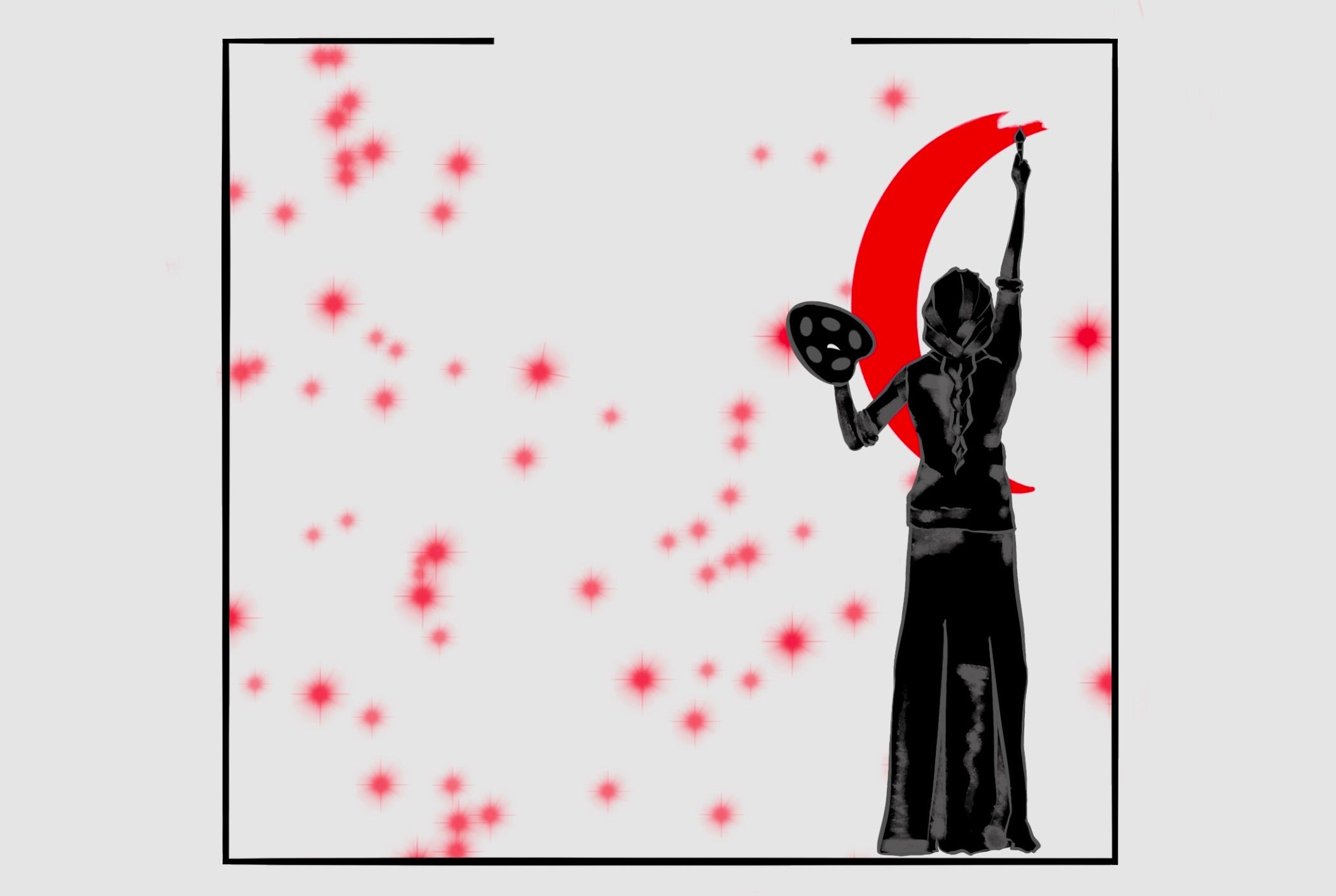
Every time I share my concept/approach of sacrificial projects, I get encouraged to write about it. So, finally, I’m writing about it. In simplest terms, a sacrificial project is one you knowingly place on the altar of gaining experience, freeing it from the responsibility of proving whether you’re “good enough” at something to earn the permission to pursue it. But before I explain exactly what I mean by that, let me tell you how the idea came about - the lover of backstories that I am, I wouldn’t be myself if I didn’t first provide some background (if you couldn’t care less about backgrounds, then just scroll down to the next header).
The Birth of Sacrificial Projects (or why amateurs need to learn to tolerate imperfection)
Let me take you back to December 2021.
It’s now been over a month since I released my first ever song Some Words, and I can finally admit (including to myself) that I’m completely dissatisfied with how it turned out. For those who know me well, this is entirely predictable. What may be slightly less predictable, however, is that this story isn’t so much about music as it is about perfectionism - something I started working on taming during the pandemic.
For a little backstory: I’ve been writing songs since I was seven, despite having no musical education whatsoever. This means that I’d come up with a song, write down the lyrics, and would have to commit the melody to memory because I didn’t have any other way of saving it. A couple of years ago, I decided I wanted to do something more with songwriting, or rather that I wanted to develop supplementary musical skills in order to gift myself the freedom of realizing my vision for songs unencumbered by my lack of skill (if you’ve ever tried sketching the face of your friend and then stared at the result with appalled cringe, you know the kind of limitation that comes from a lack of skill I’m talking about). So, I taught myself the basics of guitar and piano, learned some basic music theory, and started taking vocal lessons. Self-expression without limitation, here I come! Or so I thought.
For some time, I was devotedly learning, practicing, working hard, and dedicating all my free time to this de-limitation process. I was preparing and waiting for the moment when I would finally reach the level of being “good enough” to have “the right” to record my songs. I was convinced that I needed to have a high level of musical skill even just to begin (!) trying (!) to record songs. Yeah.
A tiny part of me still believes that - the same part that listens to negative comments from people who sit comfortably on their couches and judge those of us who are actually trying to do something with ourselves; those who find the determination and strength to step through our fear of failure; those who understand that maybe we aren’t skilled or experienced enough at something yet, but that skill and experience can only come through practice - which means we have to start somewhere. And the reality is that nobody can start out at a professional level. We have to start as an amateur and accept the possibility of a few rotten tomatoes of harsh criticism (if not outright hate) being thrown our way. There simply isn’t another route to professionalism, expertise, or just improvement. And that’s true for everyone - from Ed Sheeran to the Beatles and beyond.
Did you know that for years the Beatles played around eight hours a day nearly every day anywhere they could, building experience and stubbornly continuing despite the initial truckload of “rotten-tomato” reviews? By the time they finally arrived in the States, they had accumulated thousands of hours of practice in the most diverse and challenging environments, reaching an entirely different level and making it look as though they had always been perfect.
Or did you know that Ed Sheeran started recording songs before he developed the velvety vocals he is known for today? During interviews, to make a point (that his success is a result of hard work and dedication rather than some once-in-a-generation talent), he sometimes played old recordings of himself singing early in his career, when he sounded, to put it mildly, “not great.” Rejections from music producers rained down on him like tomato confetti (one of the producers he worked with had rejected him twice at first). But he knew what he wanted and kept moving toward it, perhaps subconsciously understanding a very simple truth: there is no professionalism without experience, no experience without risk, and no risk without a few rotten tomatoes thrown at you along the way.
And there are countless examples like these because the same principle applies to almost every area of life, and art, and expertise. But what does any of this have to do with perfectionism?
Everything.
We often see only the success part of others’ paths, when they have already become professionals/experts. Imagine being a new writer, working on your very first novel, and constantly comparing yourself to Tolstoy and Dostoyevsky, and agonizing over the devastating gap in the quality of writing, only to eventually use that comparison as a justification to stop writing. “Well, I’m just not good enough, so what’s the point?” Somehow, we forget that there was an entire journey before that, and convince ourselves that we should be as good as they are - or better - at the very beginning of ours. Otherwise, we’re failures. Otherwise, we don’t deserve to step onto our own hero’s journey.
And, to some extent, we have ourselves to blame. Most of us can probably recall at least one instance of quickly judging someone harshly for their amateur attempts at something - also known as “cringing” - sometimes irritated precisely because that someone is huffing and puffing and actually trying while we’re still too afraid. “Who does she think she is?” “If I had those brains/legs/skills, I’d stay home and keep my head down!” “I’m getting second-hand embarrassment just listening to him.” And so on. What perhaps annoys us (subconsciously) is the audacity of these “incompetent amateurs” to leave their comfort zones, get bruised, and collect enough rotten tomatoes to start pickling them (Side note: in all fairness to tomatoes, I prefer cucumbers, but they don’t work as well for the metaphor here). Because apparently, you only have the right to “put yourself out there” once you already know what you’re doing and are great at it. Putting yourself out there in order to learn how to do it? Absolutely not!
We also often forget that there are many paths toward a goal, and they are rarely straightforward. I spent an enormous amount of time studying music only to discover that recording songs required an entirely different set of skills - skills I still had to learn, and could only learn through the actual practice of recording. Or, I can’t simply proclaim myself a stand-up comedian and immediately have everyone love me. (Having everyone love you is fundamentally impossible anyway, unless you’re a baby koala or the Northern Lights.) I’d have to perform, find my audience, discover my signature topics and delivery, learn how to warm up a crowd, and so on and so forth.
But back to the song I recently released. It took me six months of hard work and a considerable amount of money to bring to the finish line (I re-recorded it three times, and recording studio time isn’t cheap) because I kept making “mistakes.” Now I understand that they weren’t really mistakes at all. They were ordinary steps in the learning process: you try something, it doesn’t work, you try again differently, and you keep going until something finally does.
And that brings me to another important realization: experience is made up of repeated attempts to bring an idea to life. You will have to pay for those attempts - with time, with money, or with both - and that is normal. The problem is that if you become fixated on your mistakes (and stubbornly insist on calling them mistakes), you can lose sight of the original idea altogether. Instead, you just keep correcting things endlessly, until you can no longer tell the difference between a mistake and an intentional choice.
Furthermore, experience is also made of perseverance in the face of repeated imperfections. That is, when you try to draw your first ever butterfly, what you get on the paper will be very different from the image in your head or the actual butterfly, if you were trying to capture it live (and in this latter case, the people around you will be quick to point out the stark difference). Now, you can throw away your pencils and vow to never draw again, or you can be like Austin and use feedback that actually helps you to make the butterfly image closer to the goal over the course of the next 5-6 attempts, focusing on a small improvement each time. The feedback experiment with Austin’s Butterfly is still one of my favorite videos on the topic (you can watch the video at this link).
But let me warn you about another curse of perfectionism: in the pursuit of the ideal, you lose the original, and with it - the originality. That’s what happened to my song. By correcting every tiny detail that seemed imperfect, I lost my connection to the song and to what it was supposed to be. The song lost its weight, its emotional rawness, its drive - all the things that had drawn me to it when I had first written it. What came out was simply a faded version of the original idea. I only realized this recently when I sat down at the piano and played it as imperfectly as I had when I first wrote it. And damn, it got me to tear up. I’ll probably record that version for you sometime so you can hear the difference.
Anyways, now I call Some Words my sacrificial song. Its main purpose, as it turns out, was to help pull me out of the swamp of perfectionism and teach me to start doing instead of hiding behind excuses and fears.
And what are you afraid to try because you supposedly aren’t “good enough” for it yet?
The Sacrificial Projects Framework
So, what is a sacrificial project? It is exactly what it sounds like: it’s a project that you use as a sacrifice on the altar of your experience in a new field. It’s already difficult and terrifying to dare to step into something new, especially if it’s something important and meaningful to you. No need to place the full weight of expectations for perfection on the first thing you do in that new field. And there’s also no need (and I mean this - please, don’t do this to yourself) to turn that first project into the gatekeeper, the litmus test for your permission to continue in the field. Better done than perfect!
So to try this out, pick a project and, before beginning, deliberately assign the primary criterion for success as experience gained (or lessons learned), rather than external performance. Then failure becomes structurally difficult: the project can be poorly received and still accomplish its designated purpose. That’s what happened with Some Words: it wasn’t that I retroactively excused its failure - rather I changed the unit by which I was evaluating its success.
“But wait,” you might be wondering, “won’t this fill the world with mediocre products?” Using the sacrificial project approach doesn’t mean that you shouldn’t do your best on whatever you’re working on. Instead, it simply aims to shift your perspectives away from allowing yourself to be defined by the performance, reception, or success of a single project and alleviate some of the pressure associated with first steps in new directions.
Your first song will likely not be a radio hit. Mine certainly wasn’t. But as I mentioned above, boy, did I learn from writing, recording, and releasing it!! Each of the “mistakes” turned into a valuable lesson, so that instead of feeling like I failed with such an important project - that of my first song - I started to feel that I succeeded at squeezing out a maximum number of lessons from this experience: how to work with a sound engineer, how to properly set up expectations with a recording studio, how to effectively communicate feedback on mixing and mastering to get the result I want, how to prepare for the actual recording session, how to time the release of the song with its promotion, and so on and so forth - so many valuable lessons that would have otherwise been unavailable to me. (Side note: if this is your current journey, I’m happy to share any tips/advice to make it even a little bit easier - just reach out!)
Your first (and even second/third) book will likely not be a bestseller, but it doesn’t mean you shouldn’t continue writing. The first book is where you learn your style and common pitfalls, where you battle with exposition and character arcs. Brandon Sanderson (yes, I very much enjoy his books) wrote 13 (!) novels before his first one was published - and the one that finally made it was the sixth novel he had written. It’s this understanding that your first book is there to help you get your bearings that frees you up to actually learn from writing it, so that each next book you write gets easier and better.
Of course, for this approach to work effectively, it helps to love or at least enjoy what you’re doing. Don’t start a project with an objective of proving how great you are - do the things that you cannot help doing, those that you are interested enough in to be willing to do for free. Because you have to tell that story. Because that song is breaking out of you. Because that painting is haunting your dreams. Because you are the only one in the world who can bring that figment of your imagination into reality.
There is another way to leverage this idea of sacrificial projects. So far, I’ve been talking about allowing the first project itself to be sacrificial - the song you desperately want to make, the book you desperately want to write - while accepting that part of its purpose is to teach you how to make the next one better. But sometimes, when a project matters too much to you to willingly place it on that altar, you can create a sacrificial project specifically to go first. When I was working on my illustrated poetry book “Ode to Hope and Despair” (or “OtHaD” - the image above is from it), I was already fully leveraging the concept of sacrificial projects and actually realized that I didn’t want that book to be my sacrificial project. So what did I do? In the time I had free from working on OtHaD, I put together and published another poetry book “LOML.” It was shorter than OtHaD and not illustrated, but it was still a strong, thematically coherent collection that helped me grasp the nuances of self-publishing: from cover page sizing to margin dilemmas to the mystery of ISBNs to inconsistencies in print quality. This way, when I was finally publishing OtHaD, I already had some idea what I was doing.
You can even leverage the concept of sacrificial projects in your job search and school application process. For instance, I try to have my first job interview(s) with the focus on practicing, learning, and getting a feel for the interview process. That way, if I get a callback, that’s great, and if not, I still obtained something valuable from that experience. Same with schools. The hardest thing sometimes is to start - to submit that first application. This is where a sacrificial school can come in very handy - it should still be a great school that you’d be excited to attend, but the primary objective of applying there is to break through what I call the “Submit button paralysis.” Also, since you are likely going to be completing that application in a relatively chill state of mind, don’t be too surprised if you actually end up getting in :)
Les Brown famously said, “The graveyard is the richest place on earth, because it is here that you will find all the hopes and dreams that were never fulfilled, […] all because someone was too afraid to take that first step, keep with the problem, or determined to carry out their dream.” My hope is that the sacrificial project approach might impoverish the graveyards a little bit by helping people take those terrifying first steps toward fulfilling their dreams and realizing their visions.
And what will be your sacrificial project this year?
P.S. The image is from my illustrated poetry book “Ode to Hope and Despair.”
Originally published on Human Condition on Substack.
Join the conversation
Leave a comment
Your comment will appear after review. Please avoid sharing private information.