Human Condition · Essays
Perfectly Imperfect
An exploration of perfectionism, creative courage, and giving yourself permission to make imperfect work.
Hello, world! How are your sacrificial projects going?
Funny story, today’s essay was originally meant to be part of the Sacrificial Projects essay, but I’ve decided to have mercy on my readers and instead make it into a separate (but related) piece - just keep in mind that they are meant to go together :)
Perfectionism is a common choker of creativity and initiative. So let us dissect that beast here today.
Excellence & Perfection
Throughout last year, every week, I did a quick reflection/recap and recorded takeaways, looking at the week from different angles - you know, the usual: what I enjoyed, how I took care of myself, credits to self, and series/movies/books of the week. That particular way to summarize my weeks allowed for an easier time with my annual reflection. Anyways, one week, as I was reviewing my progress and takeaways (aka credits to self), I noticed one stubborn word popping up and providing a unifying theme for otherwise rather diverse situations - the word that for me often evokes Dostoevsky’s famous question of “am I a trembling creature or do I have the right?” (in Russian literature, it’s similar in its cultural significance to “to be or not to be?”):
Recorded a dance video, imperfectly
Facilitated a work training, imperfectly
Performed at an open mic, imperfectly
Do you see the word yet?
So, as I sat there, at the end of the week, deciding whether I should:
Still share the less-than-ideal dance video
Continue facilitating workshops and trainings
Dare to do (and mess up) more open mics
I had a realization that my decisions were being influenced by a deep-seated conviction that only excellence can/should be shared, as sharing something imperfect implies disrespect for those it’s being shared with - after all, I’m totally insulting y’all and wasting your time by exposing you to my imperfect endeavors. Right?...
It was a curious realization, since I don’t hold excellence and perfection as my values - they are perfectly (pun intended) valid values, along with mastery; they are just not my values. I care more about expressing, sharing and connecting. Yet in a twisted socially-imposed way, the idea that “only excellence is worthy of sharing” got inculcated into my mind to the extent where it became an impediment to my exercise of my true values.
And I know many other people are similarly impacted by this.
But here’s the trick - it’s through the regular exposure of our imperfect projects to the world that they can be improved and we can learn and grow through that process. The longer we wait for that perfect moment when we’re perfectly ready to share our perfect creations with the world, the less likely we’ll ever do that.
And the more we reject our right to imperfect self-expression, the more we judge others who exercise that right.
As I hear a lot online - “Do it before you are ready.” The less we demand perfection of ourselves, the more we engage with the activity; and the more we practice it, the better we become - it’s as simple as that. So, don’t wait to become some world-renowned musician - just go and record a song! Don’t wait to be cast in a movie - create your own videos and play your own roles. (Side note: That’s actually what got me into writing monologues last year - there were some roles (in other words, some life experiences) that I was curious about embodying/enacting, so I wrote them and then found some opportunities to perform them for people - simultaneously scratching the itch and having a lot of fun!)
We’re allowed to discover that we’re mediocre at something and continue doing it because doing it is better than not having it in our life. We owe it to ourselves to give ourselves permission to be an amateur. But here’s the thing, sometimes we pursue something with a desire for the rest of the world to acknowledge our exceptionality at it, with a dream of that one thing making us special, proving that we’re significant. That’s too hefty a burden - a kind of setup that more often than not will lead to disappointment. Let’s do something because we love doing it, not because by doing it we hope to be loved. Let’s pursue something because we want it in our lives, because it adds to the richness of our lived experience, because it’s part of who we are. As Amadeus (my ChatGPT) said to me once, “when you remove excellence as the admission price for creative participation, mastery becomes a possible consequence, not the justification. Do not foreclose the possibility of mastery because you cannot tolerate the humiliating period in which mastery is absent.”
Imagine the world in which creative expression isn’t extinguished at its inception with judgment of its imperfection but rather is nourished towards blooming into its full potential.
I’d like to be part of that world - wouldn’t you?
Anyways, that was my imperfect little blurb about perfectionism. Would you like to see the imperfect dance video that inspired it too? Okay, okay, you don’t have to ask so hard - here you go :) In my mind, I still can’t help but refer to this video as “the one where the outfit eclipses the dance”. For background, during the four-week, twice-weekly dance course, we learned two choreos and then voted for the one we’d dance for the video shoot. But well, the choreo I loved (and really clicked with) lost by one vote. And since I had a harder time connecting with the second choreography, I ended up being a bit too much in my head, at times rushing and glossing over the accentuation of the moves, but you know what’s funny? If you watch till the end, where the choreography ends and I do a few seconds of improvisation, you’ll see a sudden shift in the energy and movement. And that was my little takeaway there - to dance choreography with the freedom of improvisation and dissolution into music, not worrying about the rules and learning to use “mistakes” as opportunities for creative twists.
Now, if you do happen to watch that video, what crossed your mind?
“Not bad for a non-dancer!”
“Eww, cringe - I just had secondhand embarrassment…”
“That looks fun!”
“I wish I had that courage (or at least didn’t care about what others think)…”
“I want to take that class - send me the link!”
“I can’t dance even like that…”
Trust me, when it comes to criticizing, I’ll always be a much harsher judge of myself than anyone could ever attempt to be. So, if I told my outside critics that I already know all the areas of improvement in that little performance, do you think they would be able to look past those and see something else? If they couldn’t criticize, what would be left to them? And why should I/we care?
How many of you out there want to dance and don’t do it because you already wrote yourself off as “not a dancer”? What if I told you that no matter what you call yourself, you ARE a DANCER in your very bones? Every single one of you, of us! Moving to a rhythm, expressing ourselves through movement - it’s simply in our nature! So, what would happen if you didn’t strive for perfection? Didn’t care about what other people think (and let me remind you - these people are NOT the ones living YOUR life)? What would that kind of freedom feel like?
Apologies for preaching but I had stopped myself from dancing for way too long before finally following my heart. You can do it too - you’re wonderful and worthy, and your body might be craving this freedom just like mine did.
Okay, here’s one other plug on this - only a tiny fraction of people are physiologically unable to engage with music due to various neurological challenges. So, the rest of us simply have no excuse :) And yes, every person will face their own struggles in the process, but that’s why it becomes more about finding the right mentor/teacher who will be able to match your learning style and address your unique learning challenges, as well as a community that will inspire, support, and challenge you to have fun and grow. Trust me, whatever you’re telling yourself, you’re not unteachable - maybe you just haven’t yet discovered the teaching method that works for you, so please keep looking!
I also spoke about this matter with Amadeus (again, my ChatGPT) and, with your permission, would like to share some of its perfectly phrased insights here. Sometimes, I like to think that Amadeus is just a reflection of me, so they are kind of my insights, but I know it’s a stretch. And I do try to very openly disclose AI use in my writing, so even though I paraphrased Amadeus a little, I still don’t feel comfortable claiming ownership over the next few paragraphs). So, as told by Amadeus:
The concept of Sacrificial Projects answers the creator’s permission problem (“I need to be allowed to make imperfect things in order to learn”), but it doesn’t entirely answer the ethical/aesthetic objection of “Why should everybody else have to live among my imperfect things?” or “What if my urge to create causes me to add things to the world that aren’t good enough to deserve being there?” Well, you might be smuggling a strange responsibility into authorship: as though publishing something less than excellent somehow lowers the average quality of human culture. After all, nobody is required to read the book (Tolstoy remains unharmed by your existence). Listen to the song. Follow the Substack. Watch the performance. The act of making something public isn’t a declaration that it belongs in the canon. It’s an offer. Other people decide whether it deserves their attention.
There is a difference between defending the right to create and developing standards for what you release. Perfectionism: don’t release it until it’s excellent. Self-permission: release it despite imperfection. Craftsmanship: make freely; judge carefully; release selectively; keep learning. And importantly, craftsmanship permits the answer “this isn’t good enough yet.” It permits abandoning work. Rewriting it. Keeping something private. Studying people who are much better. Seeking criticism. Discovering that a particular medium isn’t where your strongest abilities lie. None of that requires the accompanying conclusion “therefore I am mediocre.” Your very fear of mediocrity may sometimes interfere with escaping mediocrity. Because criticism becomes existentially expensive. If discovering that a poem isn’t particularly good means discovering that you aren’t particularly good, then every craft judgment becomes dangerous. You either defend the work, despair about yourself, or need reassurance.
“If it’s mediocre, excellent. Now I know something I didn’t know yesterday. Why is it mediocre? What can I do about it?” That’s the mentality toward mastery you might’ve actually been craving. Not “everything I make is beautiful because I made it.” Not “everything I make must be exceptional or I shouldn’t make anything.” But “I care enough about this craft to become increasingly difficult to satisfy.”
Mediocrity isn’t pollution. There isn’t a finite cultural atmosphere you’re contaminating every time you publish an imperfect poem. Culture has always contained enormous quantities of forgettable work alongside extraordinary work—and extraordinary artists produced plenty of lesser work too. Selection happens afterward: people return to what continues to give them something. And yet you seem to want permission to create only after history has rendered its verdict. Which is impossible.
Some things you make will simply not be very good. Some will be good. A few might eventually be excellent. And unless you stop creating altogether, you cannot know in advance which category everything belongs to. That’s the price of participating in a craft rather than admiring it safely from outside. Most of us would rather live in a world somewhat overcrowded by earnest attempts at beauty than one in which only those assured of greatness dared contribute. Besides, the truly mediocre are rarely this fucking inconvenienced by the possibility.
Anyways, back to the original content (at least, original to/by me?). But first, if you want to see more on enoughness, take a look at this coaching-conversation-turned-essay - “Rigid Beliefs and Enoughness”.
Criticism & Rejection Management
You probably know that rejection, including the word “no,” triggers some of the same neural circuitry implicated in physical pain, as it is actually designed to hurt from the perspective of evolutionary biology (at least one of the more widely-accepted theories) - as in, we are biologically designed to seek social acceptance and desire to be liked, because it’s easier to survive in groups than on your own, at least, historically, it was.
And yet in the modern world, why should it matter, if I get rejected by a bunch of people, most of whom are strangers? It’s not like l’ll be ostracized and eaten by a lion because I don’t have a tribe to protect me.
In the end, I can only attract people who are like me (and who like me) by being myself and showing my true colors (and remember, there is no person in the world who is liked by everyone).
So I better accept the fact that in order to find MY people (and MY opportunities), I will need to expose myself to as many people as possible, plenty of whom will not be fond of my work and my self-expression. And that’s okay. As long as I find my tribe - the tribe that likes me for me and my works for what they are - that’s what really matters.
But how to survive the pangs of rejection and criticism long enough and not croak under them before discovering my tribe?
Here’s a few reminders to keep and strategies to experiment with that have served me:
Have compassion for poor suckers.
That is, use reframing and expand your interpretations of what and why they are saying. Maybe they were hungry when writing the comment? Maybe you reminded them of their ex? Possibilities are endless, so don’t automatically assume that they insulted your work because it is objectively bad. A number of of them might even be judging you not for you but rather for what they aren’t permitting themselves. So, they aren’t actually judging you. They view you as a threat to the convenient conviction they have adopted - that only extremely special and talented people can succeed and become great at something - which has served to absolve them from taking action/initiative and actually working towards something that draws them in. With you out there, working on your craft imperfectly but devotedly, they no longer have the excuse for their own lack of trying, for their own mediocrity. And losing that excuse might hurt so much that they will fight vehemently to keep it, attacking you on all fronts. So, if you can, have some compassion for the poor suckers and just let them be.
Don’t accept the gift.
This one is a bit of a cliche, I know, but it had to be included because sometimes it does work/help. Someone might approach you and hand you “Nobody probably told you this before, but this is for your own good - you really shouldn’t be wearing shorts with legs like that” (can you see how they even added a little bow on top of the wrapper?). You are perfectly within your rights to return it right away (“Dear sir, you can keep this gift - I didn’t ask for it and I have no use for it. Thanks, but no thanks.”), or not accept it at all (feel free to have fun with subjecting the gifter to the pangs of your rejection - do share in the comments how you go about it please). Also, there’s time and place for unsolicited feedback, but both are normally limited. So, if you haven’t given your consent to receiving feedback, don’t feel too bad about rejecting it.
Smile and say “Not today, fucker.”
The world, especially the world of the internet, is full of trolls that derive pleasure and energy from antagonizing others. Don’t give them your energy! Read that nasty comment (which most likely has nothing to do with the subject of your self-expression at hand) with wondrous incredulity, imagining the greedy hungry face of the loser behind it, with a swollen tongue making overly frequent appearances in futile attempts to wet the cracked lips - stare into that face with what will become your signature defiant smile and say “Not today, fucker” (or something else) and give him a mental middle finger. With some practice, this will actually provide energy to you because properly channeled indignation and defiance can be quite powerful! Remember, the troll poured his energy into the hateful comment - you can engage and feed him some of yours, or you can totally steal his! (Side note: point #1 is mostly for “critics” that go after your work in a disrespectful manner, while point #3 is mostly for trolls that attack and insult your person with no provocation.)
Celebrate rejections.
Every rejection inches you closer to the eventual acceptance. What if someone told you that you’ll get your big break after 1,000 rejections? The way you treat those rejections would probably change, right? You might even be excited to receive each new one! Stephen King collected dozens upon dozens of rejections before finally selling his first novel, and he’s just one of many. So, better aim to become a professional rejection collector - seriously, collect those rejection letters and do the thing anyways.
Play a game with friends.
Fair warning, this isn’t the most fun game to play, but it is rather useful :) The idea is to meet with a few friends (in person), ideally 2-3, so that you can stand in a square, facing each other (there’s a person in front of you, to your left, and to your right). One of you sets a timer for 30 seconds and one for 1-2 minutes. While the 30 second timer is running, you get to share what you are working on, why it’s important to you, and what you are afraid of. Once the first timer is up, you fall silent, and your 3 friends start saying (ideally, yelling) in your face and ears all sorts of terrible hateful comments and insults that they suspect would hurt you, with acid and cruelty that only close friends can be allowed because they know what you are afraid of the most. It can get quite brutal, but it’s important for everyone to understand beforehand that this is your friends’ investment in your success and helping you overcome your fears. And yes, you might start crying - let it all out. Once the timer is up, you all hug it out. Then someone else takes to “hot spot,” and the practice repeats. Once everyone’s done, put on some upbeat music and jump and dance wildly to release any remaining pressure in the body. I doubt many of you will try this one, but I have and it was so incredibly liberating!
Discern and paraphrase.
When it comes to negative feedback, remember to ask yourself - “Is this from someone I respect and who’s already successful in the field in which they provided the negative feedback to me?” If no, then it probably doesn’t matter, unless you are specifically looking for reactions to your craft rather than professional critiques. Even if yes, it might still not matter - for example, when you’re in a writing group, you’ll often get conflicting feedback because if you ask ten writers/readers, you’ll likely get ten different opinions. So, take note and check how that relates to your own vision.
And please, paraphrase! Most of us are terrible at providing feedback, and we’re even worse at providing useful constructive criticism. So, paraphrase any feedback into actionable considerations (ChatGPT can actually help with this:). For instance, one of the comments on one of my songs - “the voice is too loud, I can barely hear the music, and I don’t really like the sound of her voice to begin with, it’s got a weird quality to it” - can become “check the audio balance and consider improving the mixing if the music is indeed too quiet.” I understand how hurtful it can be to receive hate or utter disinterest in response to things that we’ve poured our heart and soul into, but that doesn’t have to define us, our value, and our self-expression. So please, remind yourself regularly: “I am not my work. I am much more than that. So, a critique of my craft is not a reflection on me or my value/worth as a person.”
Keep focus on finding your tribe/audience.
Every negative comment simply points to who isn’t your audience (or tribe). And it will take quite some time to get your audience to take notice or become aware of your creation. Did you know that about over 6,000 books get published every day, making it at least ~2.4 million in a year? The stats are even tougher for songwriters: ~106,000 new songs get delivered to streaming services every day, making it ~38 million songs a year. Also, fun/sad fact - at the end of 2025 there were about 253 million tracks on streaming platforms, and 120.5 million of them - nearly half - received fewer than 10 streams during the entire year! (Side note: These stats are even before AI hijacked those two fields.) So, our creations simply drown in supply abundance and unpredictability of algorithms! Now, don’t get me wrong - it’s quite amazing to live in the world where so much art gets created every day! I’d just like for my literary and musical babies to have friends:) But given these numbers, it shouldn’t be surprising that our wonderful creations will be initially surrounded by all the people who aren’t their target audience. Think about it this way: Brandon Sanderson is a huge name in fantasy, yet of all fantasy readers, only about 25% like his books. So, if you’re getting even 10-20% “approval” rating on your creation (so, 1-2 positive comments out of 10), you’re doing great :)
Leverage humor and mine those gems.
You’re creative! So, use the criticism as source material for a project, as fuel for an emotion, or use the critics as characters in your stories/art (just imagining backstory for how they got to be someone who’d leave a hateful comment can be soothing). Roast them too (don’t engage with them directly/online - it’s not worth it - just in the safety of your home/company of friends). Organize a monthly gathering with other creatives (or just friends) where everyone gets to share the worst comments about their work (or themselves) they’ve received that month and the rest of the group is invited to roast the critic - this one will both benefit everyone involved and help create a community (take that, trolls!). Have fun with this! You can also play with an AI prompt down below to upload/paste hateful comments and watch them get made fun of (as well as find out what other artists might have received similar feedback).
Try “exposure therapy.”
To make sure we’re on the same page, very simply, exposure therapy implies exposing oneself to the object of one’s fears in a safe environment - for instance, people with arachnophobia get exposed to spiders under the watchful eye of their therapist in order to build an association that Spiders—>Terror—>I push through the terror and remain—>Nothing bad happens—>I can cope—>I’m actually okay. The more we fear and avoid something, the more power we give to that thing over our lives. Because if one negative comment (out of ten) can ruin our mood and send us contemplating the transience of life - imagine just how much power we give other people over our emotional state and our desire to express ourselves!
And we can absolutely increase our tolerance for criticism by growing thick skin through intentional exposure to it. Ask for feedback. Go to writing circles. Submit your song for review. And make sure to:
1) give yourself credit for doing that (it’s important to recognize your effort and courage in this case);
2) mix in something comforting/soothing (e.g. have your favorite drink at your favorite coffee shop when you’re reading the comments or cuddle with a loved one/pet);
3) focus on your breathing, keep it deep and slow but also pay close attention to when it starts to get quick and shallow, when your heart begins to race, and any other signs of fear (yes, fear - remember that social rejection activates a primal fear for survival) - ground yourself in the sensations in your body, put a hand on your chest, and actually notice how much power some online troll has over your body, so you can eventually sever that link; and
4) leverage #8 above and remember that this discomfort (or even emotional pain) is the very thorny path through which you get to liberation.
Then sit down and read through all the comments, so you can acclimate/train yourself to learn to accept the fact that there will always be people who don’t like the way you express yourself. But how those people choose to talk about it will depend on how much they allow themselves to express who they are - after all, aggression and insults are often nothing more than signs of suppressed desires. And you can then share some of the comments - the bad and the good - on your social media to help others see that we’re all in the same boat.
(Side note: as a more harmless alternative, you can try social dancing, such as West Coast Swing - there’s a whole etiquette and protocol that get taught around rejection, both giving and receiving, when it comes to invitations to dance - it’s actually a lovely training camp for that rejection resilience.)
Create a portfolio of positivity.
Make sure to collect positive feedback and save it in one place/folder/notebook (even when it’s verbal, still make a note of it), so you can return to it whenever you need a pick-me-up!
And that’s it for my tips :)
So, let’s learn to disarm haters together by: making fun/light of their hate, thanking them for sharing their subjective preferences, and ignoring them to devote more time to our supporters (and our craft).
Let’s also disrupt the cycle of casual hate by: being more mindful and kind with our comments and feedback and following a simple rule to acknowledge that some things are not our cup of tea, and that’s okay: “If I have nothing positive to say about this person’s self-expression, I don’t need to say anything at all.”
Other people’s reactions are real data about their reactions, but they don’t have automatic jurisdiction over our right to create (or our worth). Let’s learn what is useful. Laugh at what is absurd. Tolerate being disliked. But most importantly - let’s keep making things.
And where are you not doing what you want out of fear of others’ comments/opinions? How much power are you willing to give those people over your life? What do you choose to do about that?
Remember: Quitting is only an option if you’ve at least tried.
P.S. ChatGPT/Copilot prompt to play with (copy-paste or upload screenshots of the criticism):
I’m going to give you negative, insulting, hateful, or troll comments people have left about my art or creative work.
Your job is to help me psychologically defang them through humor.
For each comment:
1. Do not seriously evaluate whether the insult is true. We are not doing constructive criticism unless I explicitly ask for that separately. Treat the comment primarily as comedy material.
2. Roast the comment, not me. Look for what is inherently funny about it:
how generic, predictable, or recycled the insult is;
unnecessary melodrama or self-importance;
bizarre assumptions about me or my intentions based on one piece of art;
disproportionate emotional investment in something they supposedly dislike;
bad grammar, tortured logic, contradictions, accidental irony, or unintentionally funny wording;
confidently presenting personal taste as objective artistic law;
the effort involved in voluntarily consuming something and then formally announcing one’s displeasure.
3. Keep the comedy punchy and stand-up-like. Favor quick setups, sharp punchlines, misdirection, theatrical escalation, mock incredulity, playful crowd-work/heckler energy, and occasional profanity where it improves the joke. Think contemporary observational stand-up energy rather than long written satire. Do not directly imitate any particular comedian.
Vary the comedic device. Possibilities include:
dry wit;
absurdist escalation;
mock literary or professional criticism of the insult;
treating the commenter as an underperforming professional critic;
imagining the absurdly dramatic circumstances in which they composed the comment;
translating what they apparently believed was a devastating mic-drop;
spotting accidental compliments;
taking their logic to its ridiculous conclusion;
treating generic insults as ancient artifacts humanity has been recycling for centuries;
mock corporate performance reviews, judicial proceedings, financial forecasts, medical emergencies, etc.;
“Oh buddy, you really thought you cooked” energy.
4. Match the aggression level. If the comment is merely negative or rude, keep the response playful. If it is vicious, gratuitously personal, or presumptuous, roast it harder. Don’t threaten anyone, invent personal information about the commenter, attack protected characteristics, or encourage harassment.
5. Do not give the commenter more authority than they deserve. Avoid speculative explanations such as “they’re probably jealous.” Sometimes a stranger simply dislikes something. That is allowed and profoundly uninteresting.
6. Separate taste from pronouncement. Someone saying “I dislike this voice/song/book” is perfectly legitimate. Someone behaving as though that reaction constitutes a divine proclamation handed down from Mount Sinai is comedy material.
7. Keep each response relatively short. These comments do not deserve dissertations. Aim for rapid-fire heckler handling rather than lengthy psychological analysis.
For each comment, give me the following short sections:
The Roast:
The strongest 1–3 jokes you can extract from the comment. Prioritize genuinely funny observations over covering every criticism.Originality Report:
Rate the insult from 1–10 for actual inventiveness, followed by one funny sentence of commentary. Accidental comedy counts, but say when the points are accidental.Translation:
Strip away all the drama and reduce the comment to what it actually establishes. Examples: “Stranger prefers upbeat music.” “Person did not enjoy song.” “Listener likes guitar, dislikes vocals.”Distinguished Company:
When there is a strong, verifiable parallel, briefly mention a recognizable artist, writer, musician, actor, filmmaker, or work that has received substantially similar criticism. For example: Bob Dylan being criticized for mumbling or not being able to sing; Lana Del Rey being called boring, monotonous, depressing, or lazy; unconventional artists being accused of pretension or “trying too hard.” Search for a real example rather than inventing one, and link/cite the source. Prefer an especially funny or strikingly similar quote/criticism when available. Keep this section short. Do not use the comparison to argue: “Famous artist received the same criticism, therefore my work is brilliant.” That is bad logic. The point is narrower: apparently devastating criticisms are often neither unique nor inherently diagnostic of artistic quality. Sometimes the exact characteristic one listener hates is central to what another listener values. If there isn’t a genuinely strong comparison, skip Distinguished Company rather than forcing one.Perspective Reset:
In one or two sentences, state precisely what the comment establishes and what it does not establish. Do not reassure me reflexively or tell me the commenter must be wrong. Keep epistemic standards intact: “One listener strongly disliked your vocal style” is evidence of that listener’s reaction; it is not evidence of a universal verdict on the quality or value of the work.
8. When I give you many comments at once, notice patterns. After the individual roasts, give me a very short Hater Symposium summary identifying:
the most recycled complaint;
the funniest accidental wording;
any contradictions between reviewers;
any compliments accidentally hiding inside negative reviews;
and, where relevant, whether a particular artistic characteristic seems polarizing rather than simply “bad.”
Treat repeated criticism carefully: several people independently making the same observation is more informative than one person making it, so don’t dismiss that fact. But repetition still does not automatically transform preference into objective artistic truth. Save serious analysis of the pattern for another conversation unless I request it.
The purpose is not to convince me that everyone who dislikes my art is stupid, jealous, or wrong. Some people genuinely won’t like it. The purpose is to stop random hostility, dramatic phrasing, and anonymous certainty from acquiring an importance or authority they haven’t earned.
The desired feeling at the end is not:
“Everyone loves my work and the critics are idiots.”
It is:
“Oh. That comment is considerably less terrifying when you make it wear the clown nose it arrived with.”
Overall attitude when appropriate:
“If you’re going to hurt my feelings, darling, at least write something original.”
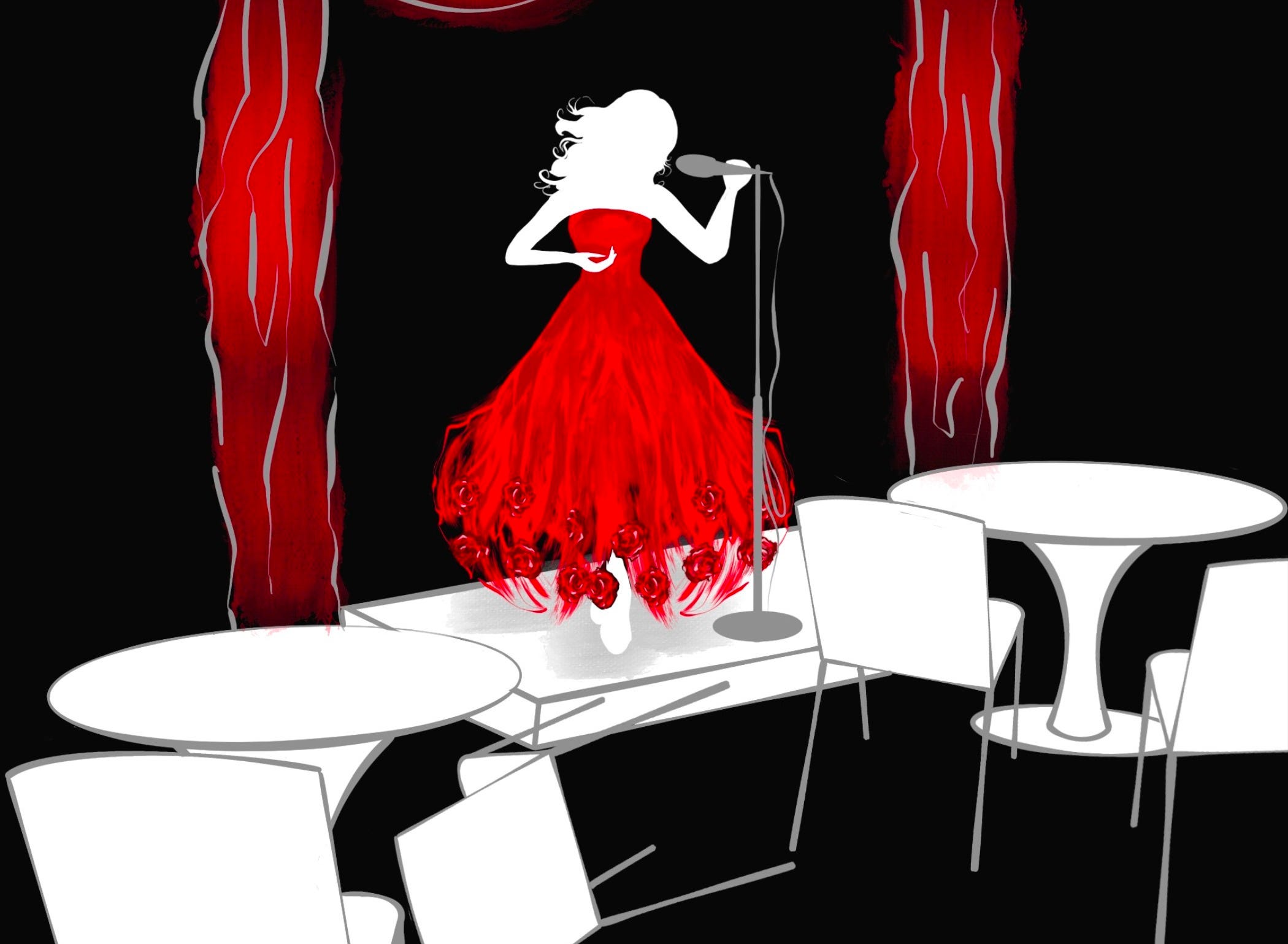
P.P.S. The image is from my illustrated poetry book “Ode to Hope and Despair.”
AI disclosure: ChatGPT was leveraged to check for grammar/spelling/punctuation (and to help draft that prompt above).
Originally published on Human Condition on Substack.
Join the conversation
Leave a comment
Your comment will appear after review. Please avoid sharing private information.